Rise Up and Walk
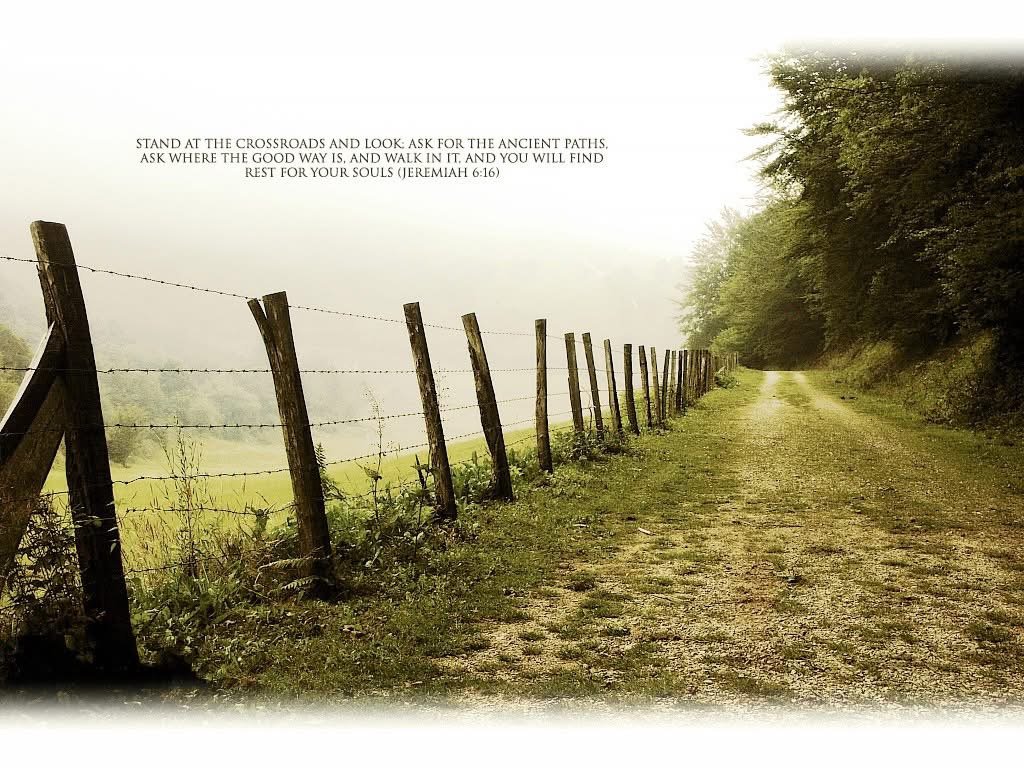
This morning, I walked through a park.
That sentence would have meant very little to me a few years ago.
But today, it feels like a prayer.
The morning was quiet. Sunlight slipped between the branches and scattered across the path before me. Birds called from somewhere high in the trees. Leaves stirred gently in the breeze, and beneath all of it I could hear the steady rhythm of my own footsteps.
One step.
Then another.
Then another.
There was a time when I never thought about walking.
I stood because I wanted to stand. I crossed a room because I wanted to cross it. I stepped outside and simply trusted that my legs would carry me wherever I wished to go.
Walking was ordinary.
Until it wasn’t.
Last year, I lost that ability.
Suddenly, something as simple as standing became a mountain.
First, I had to learn to stand again.
Then came the walker.
I remember gripping it tightly, learning to trust legs that no longer felt trustworthy.
One uncertain step.
Then another.
Then came the cane.
And slowly, by the mercy of God, there came a day when I could take a step without either one.
Today, the Lord has given me the gift of walking on my own again.
So this morning, as I moved along that path beneath the trees, I found myself paying attention to things I once ignored—the pressure of the ground beneath my feet, the bending of my knees, the balance of my body, the simple grace of moving forward.
Walking.
Just walking.
And as I walked, these ancient words came quietly to mind:
“He has shown you, O mortal, what is good.
And what does the Lord require of you?
To act justly and to love mercy
and to walk humbly with your God.”
What happens when we are paralyzed and can’t walk?
Paralysis is a strange word.
At its most basic, it means the loss or impairment of movement or sensation. A limb no longer responds. A part of the body no longer feels. Something that was meant to move becomes still.
But paralysis can reach much deeper than the body.
It can also mean an inability to act.
Fear can paralyze us.
Shame can paralyze us.
Disappointment can paralyze us.
After enough pain, we can become motionless inside long before anyone notices it on the outside.
And that is one of the cruel things about paralysis.
After a while, we begin to build our lives around what we cannot do.
Our inadequacies become the walls of the room.
Our disappointments become the furniture.
Our fears become familiar companions.
And before long, paralysis begins to frame our existence.
We stop asking what might still be possible.
We stop expecting anything to change.
Sometimes we even stop feeling the ache of what we once wanted.
With that as our backdrop, come with me for a moment to John 5.
Let us walk together into Jerusalem.
Bethesda
Just inside the city, near the Sheep Gate, there is a pool called Bethesda.
Traditionally, the name has been associated with the idea of a House of Mercy.
Five covered porches surround the water.
At first glance, perhaps the place seems peaceful.
Stone columns.
Shade beneath the porticoes.
Water gathered beneath the Jerusalem sun.
But as we draw closer, the beauty disappears.
The porches are crowded.
Bodies lie everywhere.
The blind.
The lame.
The sick.
The weak.
The forgotten.
Some have family with them. Others lie alone.
A man coughs somewhere nearby.
Someone cries out for water.
Another struggles to shift his body away from the heat of the sun.
The smells of sweat, sickness, dust, and human waste hang heavy beneath the stone roofs.
There are too many people and too little help.
It is a gathering place for human suffering.
Everyone is watching the water.
Waiting.
Hoping.
Wondering whether today might finally be their day.
Read John 5:1–5 slowly.
Then look again.
Off toward one side of the porch lies a man.
He hardly seems noticeable anymore.
His body has grown thin.
His muscles have wasted.
Perhaps he lies curled upon a worn mat, looking almost like a pile of old cloth in the shadows.
John tells us he had been in this condition for thirty-eight years.
Thirty-eight years.
Sit with that number for a moment.
Thirty-eight summers.
Thirty-eight winters.
Thirty-eight years of watching other people walk past him.
Thirty-eight years of needing help with things most of us never think about.
Water.
Food.
Movement.
Privacy.
Dignity.
Perhaps someone brought him there in the morning and returned for him later.
Perhaps every day looked almost exactly like the day before.
He had become one more wounded body among many.
One more desperate man waiting by the water.
And over time, it is possible that the pool itself became the center of his entire world.
His disease.
His limitations.
His inability.
His disappointment.
Day after day.
Year after year.
Everything focused upon what was wrong.
Then Jesus walks in.
The Question
Jesus moves through the crowd.
Past the blind.
Past the lame.
Past the desperate.
And somehow, among all those wounded lives, His eyes settle upon this one man.
John tells us that Jesus knew he had been in that condition for a long time.
Then Jesus asks him a question.
Not about his legs.
Not about the pool.
Not about how long he had been lying there.
Jesus reaches deeper.
“Do you wish to get well?”
What a strange question.
I can almost imagine the man looking up at Him.
Do I wish to get well?
The question begins to turn in his mind like a rusted wheel that has not moved in years.
What kind of question is that?
Why else would I be lying here?
Does He think this is funny?
But when the man looks into Jesus’ face, there is no mockery there.
No cruelty.
No sarcasm.
Jesus is serious.
And He waits.
Do you wish to get well?
Why would Jesus ask something that seems so painfully obvious?
Of course he wants to get well.
Or does he?
That is the unsettling thing about the questions of Jesus.
He often asks about things that seem obvious because beneath the obvious lies something we have stopped seeing.
Jesus knew the answer.
But did the man?
Do we?
A Desire Buried Beneath Thirty-Eight Years
Think about his life.
His whole existence had been shaped by brokenness.
Forget riches.
Forget recognition.
Forget fame.
For this man, life had been reduced to one simple, almost unreachable desire:
To walk.
Perhaps when he was younger, he dreamed about it constantly.
Maybe he watched other children run through the streets.
He could hear their feet striking the ground.
Their laughter disappearing around the corner.
And he remained where he was.
Perhaps he watched families make their way toward worship while he stayed behind.
Maybe there were places he wanted to go that he never reached.
People he wanted to follow but could not.
There were ordinary things that required another person’s hands.
To move.
To wash.
To get a drink.
To attend to the most basic needs of his own body.
He wanted to walk.
Surely he did.
But how long can a person carry the same unanswered desire?
One year?
Two?
Five?
Ten?
Twenty?
At what point does hope begin to protect itself by becoming numb?
Maybe at first he believed.
Next year.
Then perhaps:
Maybe someday.
And eventually:
This is simply who I am.
That may be one of the deepest forms of paralysis.
The body stops moving first.
Then, eventually, desire stops moving too.
The heart develops calluses.
Dreams become dangerous because dreams can hurt.
Hope becomes something we no longer allow ourselves to feel.
He was still lying at Bethesda.
Still near the place of mercy.
Still near the possibility of healing.
But perhaps somewhere along the way, the desire itself had gone quiet.
Then Jesus asks:
“Do you wish to get well?”
And suddenly an old desire begins to breathe again.
More Than Walking
Notice something important.
Jesus does not ask:
“Do you want to walk?”
He asks:
“Do you wish to get well?”
There is something larger hidden in that question.
Walking is part of it.
But wholeness reaches deeper.
Jesus is not merely addressing legs.
He is speaking to a man.
A heart.
A history.
A lifetime shaped by helplessness.
And instead of answering the question directly, the man gives Jesus his explanation.
Read John 5:7.
In essence he says:
“I have no one.”
There it is.
The language of inadequacy.
The mantra he has probably repeated for years.
I cannot.
No one helps me.
Someone always gets there before me.
This is why nothing changes.
Perhaps the saddest thing about paralysis is that, after enough time, we begin to explain our lives through it.
Ask us about hope, and we tell you about our limitation.
Ask us what we desire, and we describe our disappointment.
Ask us what we want God to do, and we explain why it probably cannot happen.
Jesus asks about wholeness.
The man answers with inadequacy.
I understand that more than I would like to admit.
Perhaps you do too.
The Command
Then Jesus speaks.
Read John 5:8–9.
“Rise, take up your mat, and walk.”
Rise.
Imagine hearing that word when you have spent thirty-eight years on the ground.
Surely there was a moment when nothing appeared to have changed.
The mat was still beneath him.
The pool was still nearby.
The crowd was still around him.
His legs still looked like the same legs.
But the voice of Jesus had entered the paralysis.
Rise.
At some point, the man had to respond.
He had to move toward the command before he had any history of being able to do it.
Perhaps he put one hand against the stone.
Perhaps his arms trembled as he pushed himself upward.
Perhaps for the first time in decades, he felt strength moving where weakness had lived.
A knee beneath him.
A foot on the ground.
Then another.
Can you imagine the first moment he stood?
The world would have looked different from up there.
For thirty-eight years, he had seen feet passing in front of him.
Now he was looking into faces.
For thirty-eight years, others had carried him.
Now he bends down and picks up the mat that once carried him.
The thing that had been the symbol of his helplessness is now beneath his arm.
And he walks.
One step.
Then another.
Away from the pool.
Away from the porch.
Away from the place where his entire identity had once been defined by what he could not do.
He walks.
Look carefully at the way Jesus deals with people.
Again and again, He leads them toward the deepest places in their hearts.
Consider the two blind men near Jericho.
They sit beside the road asking for help.
Day after day, perhaps they have learned to listen for footsteps and hold out their hands.
Coins.
A piece of bread.
Whatever a passing stranger might offer.
Then they hear that Jesus is coming.
They begin to shout.
The crowd tries to silence them.
They shout louder.
And finally Jesus stops.
He stands before two blind men.
Their condition could hardly be more obvious.
Yet Jesus asks:
“What do you want Me to do for you?”
There it is again.
The question.
Why ask blind men what they want?
Surely Jesus can see.
But perhaps the obvious is not always obvious to the wounded heart.
How long had they been blind?
How long had they sat beside that road?
At what point had the desire to see been replaced by the desire simply to receive enough coins to make it through another day?
There is a terrible exchange that can happen when hope disappears.
We stop asking for life.
We start asking for loose change.
We become beggars in the dust, satisfied with enough to survive another day, when the King of heaven is standing before us asking:
What do you want?
Jesus came to awaken desire.
To the weary, He speaks of rest.
To the lost, He speaks of the way home.
To the bound, He speaks of freedom.
To the brokenhearted, He speaks of healing.
To the dead, He speaks resurrection.
He keeps drawing people toward life.
Why We Walk
Think about a little child learning to walk.
At first, the child is unsteady.
The knees wobble.
The feet seem to have no idea where they are supposed to go.
The child falls.
Again and again.
But then someone kneels a few feet away.
A mother.
A father.
Arms open.
“Come here.”
Suddenly, there is a reason to stand.
The child pulls himself upright.
One trembling step.
Then another.
Why?
Because something is waiting at the end of the walk.
Arms.
Love.
Home.
That is the deeper truth.
The purpose of walking is not merely walking.
We rise because there is Someone worth walking toward.
We walk because the Father has opened His arms.
We walk because His presence is ahead of us.
We walk because His house is our home.
We walk because love has called our name.
What Do You Wish For?
So when I look at our Rabbi standing at Bethesda, I begin to understand.
Walking begins with a question.
What do you wish for?
Not what have you lost?
Not what happened to you?
Not how long have you been lying there?
Not who failed you?
Not who got into the water before you?
What do you wish for?
Perhaps somewhere inside you there is an old desire you stopped speaking about.
Perhaps disappointment taught you to bury it.
Perhaps fear paralyzed it.
Perhaps failure convinced you that you were foolish for ever wanting it.
Perhaps you have lived so long beside the pool that you can no longer imagine yourself anywhere else.
And maybe Jesus is asking you the same question:
Do you wish to get well?
Do you want life again?
Do you want to feel again?
Do you want to hope again?
Do you want to love again?
Do you want to become the person God has been calling you to become?
Then listen.
You may have to put something down.
Perhaps it is the beggar’s bowl of inadequacy.
The old explanation.
The old excuse.
The old identity.
The sentence you have repeated for years:
“I have no one.”
Let it go.
Reach out.
Risk hope again.
Listen for the voice of Jesus entering the place that has been motionless for far too long.
And when He says:
Rise.
Rise.
Put your feet beneath you.
Let the old mat stay where it belongs—under your arm, not beneath your life.
Take the first uncertain step.
Then another.
You may tremble.
Walk anyway.
You may feel weak.
Walk anyway.
You may not know exactly where the road leads.
Walk anyway.
Because the One who called you from the ground is already standing ahead of you.
And perhaps the greatest miracle is not merely that weakened legs begin to move.
Perhaps the greater miracle is that a heart that stopped hoping begins to desire life again.
There is a relationship with God worth getting off the ground for.
There is freedom worth leaving the mat for.
There is mercy worth walking toward.
There is a Father with His arms open.
So rise.
Take up what once defined you.
And walk.
Selah.