I know the Christmas season is swiftly approaching, but this got stuck in my head and I’m sharing it with you. Hope it makes sense. The Gift That Holds the Love On
As we move into the season of celebration, I want to share with you two things.
First, a child.
And then, a gift.
At least, that is how I used to tell the story.
But the older I get, the more I realize they were never really two separate things.
The child taught me what the gift meant.
And the gift taught me something about Christmas I have never forgotten.
Many years ago, I had the privilege of leading a puppet ministry at a church here in Miami.
Every Sunday, we put on something that looked a little like a Christian version of Sesame Street. There were puppets, songs, Scripture, laughter, and a room filled with children who came in on the church buses.
On any given Sunday, there might be three hundred and fifty or four hundred children packed into that chapel.
That is a lot of little faces.
But every now and then, one of them finds a place in your heart and never really leaves.
For me, that child was Erin.
Erin was five and a half years old.
She had bright blonde hair, almost always pulled back into a ponytail that seemed to bounce wherever she went.
And Erin rarely walked anywhere.
She hurried.
She skipped.
She bounced from one thing to another with the kind of excitement only a five-year-old can sustain.
Everything interested her.
Everything deserved a question.
Why did the puppet say that?
Where did the music come from?
Did angels really watch us?
Could Jesus hear her if she whispered?
She had a way of looking at the world as though something wonderful might happen at any moment.
And I cannot remember ever seeing her without a Band-Aid somewhere.
A scraped knee.
An elbow.
An arm.
Something was always healing.
Which made sense.
Erin moved through life a little faster than her balance could keep up with.
But she never seemed bothered by it.
A Band-Aid was simply part of the adventure.
There was something else about Erin that made her unforgettable.
Every Sunday, when she walked into the chapel, she would suddenly stop.
All that energy would become still for just a moment.
She would look upward, smile, lift her hand, and wave.
“Hello, angels.”
Then, just as quickly, she was off again to find her seat.
And when church was over, she would do the same thing on the way out.
She would stop at the doorway, look up, wave, and say,
“Goodbye, angels.”
Then off she would go, ponytail bouncing behind her.
I never quite knew what she saw.
But she seemed completely certain that someone was there.
And somehow, when Erin waved at the angels, the room felt a little more holy.
I did not know it then, but one of those little Band-Aids would one day teach me more about Christmas than a shelf full of theology books ever could.
A true gift is really a simple thing.
It says:
I know you.
I thought of you.
I chose this for you.
A gift is freely given. Once it changes hands, it belongs to the one who receives it.
And a real gift always costs the giver something.
That is what makes a gift personal.
Someone has paid attention.
They know what you need.
They know what makes you smile.
Sometimes they even know what your heart wants before you know how to say it yourself.
And that is what makes Christmas so astonishing.
The first Christmas gift came from a Father who knew us completely.
The gift was Jesus.
The Incarnation is the mystery of God entering our world in human flesh.
The One who made the stars was carried beneath them.
The hands that formed mankind became the hands of a child.
The One who sustains all creation knew hunger, weariness, pain, and rejection.
He did not stop being God.
He humbled Himself.
He came close enough to enter our weakness.
Close enough to carry our sorrow.
Close enough, in time, to bear the cross.
That is what love does.
It comes near.
It gives itself.
It costs something.
And now we come back to Erin.
One Christmas, we wrote a puppet skit about a character named Walter the Christmas Candle.
Walter was the one candle on Jesus’ birthday cake.
His greatest desire was to shine as brightly as possible for Jesus because Jesus had healed his broken heart.
The puppet even wore a Band-Aid over his heart.
At the end of the program, I noticed Erin walking toward the door.
But Erin was not simply walking.
She had one hand stretched above her head, holding her blonde ponytail straight up like a candle wick.
She had that determined little look children get when they have decided something important and see no reason to discuss it further.
I watched her for a moment.
Then I asked,
“Erin, what are you doing?”
She looked at me as though I had missed the entire point of the program.
“I’m going to find somebody to light my wick.”
Her ponytail was the wick.
She wanted somebody to set her hair on fire so she could shine for Jesus.
That got my attention.
So I sat down with her quickly.
“Erin, does Jesus live in your heart?”
She nodded eagerly.
I said, “Then you don’t have to set your hair on fire.”
She blinked.
Thought about it.
Then looked visibly relieved.
I told her,
“The light is already in you. Jesus shines through the way you love people. Through your eyes. Through your words. Through the good things you do.”
She listened very carefully.
Then her face lit up.
“Whew. I like that a lot better.”
So did I.
Then she did something I have carried in my heart ever since.
She looked down at one of the Band-Aids on her arm.
She studied it for a second, as though another idea had just arrived.
Then she peeled it off.
Held it out to me.
And said,
“Here. You can use this to heal somebody else’s boo-boo.”
I took it from her.
Then she leaned in a little closer, lowering her voice as though she were letting me in on a secret.
“My mommy says it holds the kiss on.”
That stopped me.
Her mother had kissed her wound.
Then covered it with a Band-Aid.
And in the heart of this excited, curious, wonderfully literal little girl, that Band-Aid had become more than something covering a scrape.
It was holding love in place.
It was keeping the kiss close to the wound.
And now Erin wanted to give that love to someone else.
She had received something good, and immediately wanted to pass it on.
She stood up.
Her ponytail dropped back into place.
Then she headed toward the door.
But before leaving, she stopped.
Looked up.
Smiled.
Waved.
“Goodbye, angels.”
And then she was gone.
I have thought about her many times through the years.
Erin understood something profound.
She had been loved.
And because she had been loved, she wanted somebody else to feel it too.
That is the heart of Christmas.
God loved us first.
He came near.
He gave Himself.
And now He calls us to carry that same love into the lives of others.
Maybe that is the real gift we are meant to give.
Not something expensive.
Not something impressive.
Maybe it is mercy.
Kindness.
Forgiveness.
A meal.
A phone call.
A hand held in a hospital room.
A chair pulled close to someone who is grieving.
Something that quietly says,
I see you.
You are not alone.
You are loved.
And maybe, after all these years, Erin was right.
Maybe the wrappings were never the important part.
This (October) is pastor appreciation month. I wrote this story in honor of the men I had the privilege and honor of serving with at New Life for 35 years, men of God, who I was blessed to love Jesus with: Brad Smith, Jim Kent and Eric Slotman. Thank you for pastoring me and my heart. Also to my pastor friend Ron Wallace. We spent our younger years singing and preaching about Jesus. I can think of no better way to spend our days. And to the young lions that I have come to know, Shane Mumford, Sabastian Sebastian Masson and Charles Felton. Young preachers, beginning their journey with the Savior…May you become wise and full of fire.
When I was a young preacher, the Lord was kind enough to place some old men of God along my road.
They were not famous men. Most never wrote books, preached beneath bright lights, or stood before thousands. They were simply old preachers who had put their hands to the gospel plow and never looked back.
They had baptized sinners and buried saints. They had stood beside hospital beds, gravesides, wedding altars, and kitchen tables. They had preached when the house was full and when there were more empty pews than people.
And if you were quiet enough around them, every now and then they would tell you something the years had taught them.
I have been in the ministry for fifty years now, and some of the lessons I remember best were never spoken from behind a pulpit.
They came on front porches.
Over cups of coffee.
In empty sanctuaries after everybody else had gone home.
Years ago, I had the blessing of knowing one particular old preacher.
He preached Jesus.
That was the best way I knew to describe him.
No theatrics.
No performance.
No smoke.
No tricks.
He would simply open the old Book and preach Jesus.
And somehow, that was enough.
One Sunday morning, he asked me to ride with him to a little Baptist church where he had been invited to fill the pulpit.
I had never attended a Black church service before, and I did not know quite what to expect.
But I remember walking through those doors.
You could feel life in that little church.
The women were dressed for Sunday. The men greeted one another with firm handshakes. Children shifted in the pews while their mothers gave them that particular look mothers have perfected through the centuries.
Then the music started.
And those people did not merely sing hymns.
They sang from somewhere deep.
They sang as though the words had been paid for through suffering.
They sang about heaven as though they had already caught a glimpse of it, and about grace as though grace had met them personally.
Hands lifted.
Heads nodded.
Feet tapped against the wooden floor.
And every now and then someone would call out,
“Amen!”
“Preach it!”
I remember sitting there with my guitar thinking,
Lord, these folks have come to church.
Then the old preacher stood.
He walked to the pulpit, laid down his Bible, opened the Word of God, and began to preach.
Jesus.
Grace.
The cross.
Mercy.
The mystery of a God who loves sinners enough to come looking for them.
The morning grew warm, and the ladies began working their church fans.
Back and forth.
Back and forth.
You could hear them fluttering beneath the preacher’s voice.
Every so often someone would answer him from the pews.
“Amen!”
“That’s right!”
“Preach it, Reverend!”
And he did.
He preached until it seemed as though grace itself had settled over that little sanctuary.
When the sermon ended, church still wasn’t finished.
We sang another song.
Then another.
And somehow another after that.
Nobody seemed particularly concerned with the clock.
Eventually the last prayer was prayed, the final amen spoken, and the congregation began drifting toward the doors.
There were hugs.
Handshakes.
Laughter.
Folks stood around talking as though nobody was eager to leave the House of God.
Then, little by little, the parking lot began to empty.
The sanctuary grew quiet.
I started packing my guitar.
I wrapped the cord, closed the case, and gathered my things.
The service was over.
Or at least I thought it was.
Out of the corner of my eye, I noticed the old preacher.
He had not left.
He was sitting alone on the steps beneath the pulpit.
Only a few minutes earlier, that room had been filled with singing and shouting. Now the church fans had stopped moving. A few bulletins lay scattered across the pews. The voices were gone.
And there he sat.
Nearly eighty years old.
His shoulders had begun to bend beneath the years. His hands were weathered, veins rising beneath thin skin, fingers bent from a lifetime of work and turning the pages of an old Bible.
His hair had gone white.
His face carried the deep lines that come from years of laughing, grieving, praying, and preaching people through their darkest nights.
But it was his eyes I remember most.
Old eyes.
They had looked into hospital rooms and open graves.
They had watched young couples take vows and old saints draw their final breath.
They had seen sinners walk down aisles and prodigals wander away.
They had cried prayers nobody else ever heard.
Yet there was still fire in them.
Not the restless fire of a young preacher trying to prove something.
A quieter fire.
The kind that comes from walking with God long enough to know that He does not need to prove Himself anymore.
He looked over at me and lifted one weathered hand.
“Come here, boy.”
I put my guitar down and walked over.
He patted the step beside him.
I sat down.
And that is when the real sermon began.
He looked at me and asked,
“Boy, when do you know you’re following Christ with your whole heart?”
I sat there thinking.
Then he asked,
“How do you know when you’re close to His heart?”
Well, I was a young preacher, and young preachers have an unfortunate habit of believing every question requires a deep theological answer.
So I began reaching around inside my head for something impressive.
Doctrine.
Sanctification.
Prayer.
Spiritual disciplines.
I was preparing an answer that belonged in a theology book.
The old preacher watched me struggle for a moment.
Then he smiled.
Finally, he saved me from myself.
“Boy,” he said, “you know you love Him because when you sin, you weep like Peter wept.”
I stopped.
The words went straight through me.
When you sin, you weep like Peter wept.
Not because somebody caught you.
Not because your reputation might suffer.
Not merely because there are consequences.
You weep because you have wounded the heart of Someone you love.
Peter denied Jesus.
Then the rooster crowed.
And when Peter realized what he had done, Scripture says he went out and wept bitterly.
Those tears said something.
Peter loved Him.
Brokenly.
Imperfectly.
But deeply.
The old preacher sat quietly for a moment.
Then he lifted his head.
I can still see him there.
An eighty-year-old man sitting on worn wooden steps beneath an empty pulpit.
His sermon finished.
His congregation gone.
His old Bible nearby.
He looked smaller sitting there than he had while preaching, but somehow he carried more weight.
Not importance.
Not ego.
Years.
Years of failing God and finding mercy.
Years of watching grace carry people when nothing else could.
Years of learning that the gospel he had preached as a young man was still true when his hair turned white.
He had reached the place where a man no longer needed to impress anyone.
He simply knew Jesus.
And I wanted what he had.
Then he said,
“Listen to me, boy.”
His voice was softer now, roughened by age and years of preaching, but it carried through that empty sanctuary.
He looked around the room.
“Look at this.”
“We met with the Living God this morning.”
He paused.
“We sang.”
“We danced.”
“We prayed.”
“We wept.”
Then that old preacher looked at me and said,
“And we’re all leaving here alive.”
The words hung in the silence.
At first, I thought he simply meant the service was over and everybody was going home.
But that was not what he meant.
We had come into the presence of the Living God.
The God who spoke worlds into existence.
The God before whom prophets trembled.
The God whose holiness exposes everything hidden in us.
And yet we had not been consumed.
Because of Jesus, we had been welcomed.
We walked into that little church carrying sin, sorrow, weariness, fear, and burdens known only to God.
We sang.
We prayed.
We repented.
We wept.
And grace met us there.
Something died in that room.
A little pride.
A little hardness.
A little more of the old self that keeps insisting it can live without God.
And something else came alive.
Hope.
Mercy.
Repentance.
Joy.
I sat beside that old preacher and said nothing.
There was nothing to say.
I just let the lesson settle into me.
Fifty years have passed through my hands since those days.
Fifty years of preaching.
Hospital rooms.
Weddings.
Funerals.
Victories.
Disappointments.
People coming to Christ and people walking away.
And yet, when I think back to that Sunday morning, what I remember most is not the sermon.
It is the silence afterward.
An eighty-year-old preacher sitting on the steps beneath the pulpit.
White hair.
Weathered hands.
Old eyes still bright with the things of God.
And a young preacher sitting beside him who did not yet understand how much he had left to learn.
I thought I had gone there to help with the service.
I did not know I had gone there to be schooled.
After fifty years of ministry, I am still trying to learn what that old preacher already knew:
Love Jesus enough that your sin can still break your heart.
Never become so familiar with holy things that you cease to tremble before them.
And never forget what a wonder it is that sinners can come into the presence of the Living God and, because of Jesus, not be destroyed—but forgiven, restored, and made alive.
We do not merely attend church.
We come before the Living God.
And by His mercy, we leave different than we came.
A little less proud.
A little less hard.
A little more awake.
A little more alive.
That is what the old preacher meant.
We met with the Living God…
and by His mercy, we walked away alive.
Fifty years later, I can still see him sitting there.
And I still pray:
Lord, when my hair is white, when my voice is worn, when most of my sermons have already been preached and the sanctuary grows quiet around me—
let there still be fire in my eyes.
Let my heart still be tender enough to weep.
Let me still marvel that sinners may stand in Your presence and live.
And let me know Jesus well enough that some young preacher sitting beside me might recognize that I have been with Him.
When I was fifteen years old, I spent my summers in Flat Creek, Tennessee.
I did not know it then, but those summers were teaching me things I would carry for the rest of my life.
Flat Creek had a way of doing that.
The lessons did not always come from books or pulpits. Sometimes they came from an old fence row, a hay wagon, a cold bucket of spring water, or the weathered hands of a man who had spent most of his life working the earth.
That summer, I met a man named Sun Taylor.
Sun was a large man, broad through the shoulders, with hands that looked as though they belonged to the land itself. They were scarred and calloused from years in the fields, the kind of hands that had gripped plow handles, lifted feed sacks, repaired fences, and worked beneath a Tennessee sun until the light began to fade.
Sun was a plowman.
He was the son of a sharecropper, and his granddaddy had been a slave.
One day I asked him about his name.
He broke into that wide grin of his and told me that he had been born on a Sunday and that his father made a little extra money doing tailoring.
“That’s how I got my name,” he said.
Sun Taylor.
And then he laughed.
I can still see that grin.
One crisp Monday morning, we all gathered in the upper pasture to bale straw for the winter.
It was about eighty acres.
To a fifteen-year-old boy, it looked like it went on forever.
The morning began cool, but by midday the Tennessee sun had settled over the fields. The air smelled of cut grass and dry straw. Dust clung to our clothes and sweat ran down our backs as we worked our way across the pasture.
By noon, everybody was ready to stop.
We pulled the wagon near the fence row where there was a little shade.
The fence was tangled with honeysuckle, and butterflies drifted lazily among the blossoms as if they had nowhere else in the world to be.
We sat down in the shadow of that wagon.
My grandmother Lottie Belle Dalton, had packed sausage and biscuits for us.
Nothing fancy.
Just good country food wrapped up and carried into the field.
We sat there with dirt on our clothes and straw stuck to our shirts, eating those biscuits and sausage like we had been invited to a feast.
And that is where a plowman schooled me.
Sun sat there beneath the wagon, looked out over the field, and smiled that great big smile.
Then he said,
“The Lord has surely been good to me.”
He paused and looked down at the food in his hands.
“Good to me,” he said again.
“I’m sitting here eating like a king.”
Then he looked out across the pasture.
“Working in these fields.”
And then he said one word that I have never forgotten.
“Free.”
He did not say it bitterly.
He did not say it with anger.
He said it with gratitude.
Here was a man whose granddaddy had been a slave, whose father had worked as a sharecropper, sitting beneath the shade of a wagon in a Tennessee field, eating sausage and biscuits, and thanking God because he was free.
At fifteen years old, I did not fully understand what I was hearing.
I do now.
After a while, Sun looked over at me and my cousin Eddie.
His face grew a little more serious.
And he said,
“When the Lord finally takes me home, I want to look behind me and see the rows straight and the furrows clean.”
That was it.
No sermon.
No long explanation.
Just a plowman talking about the end of his life.
Straight rows.
Clean furrows.
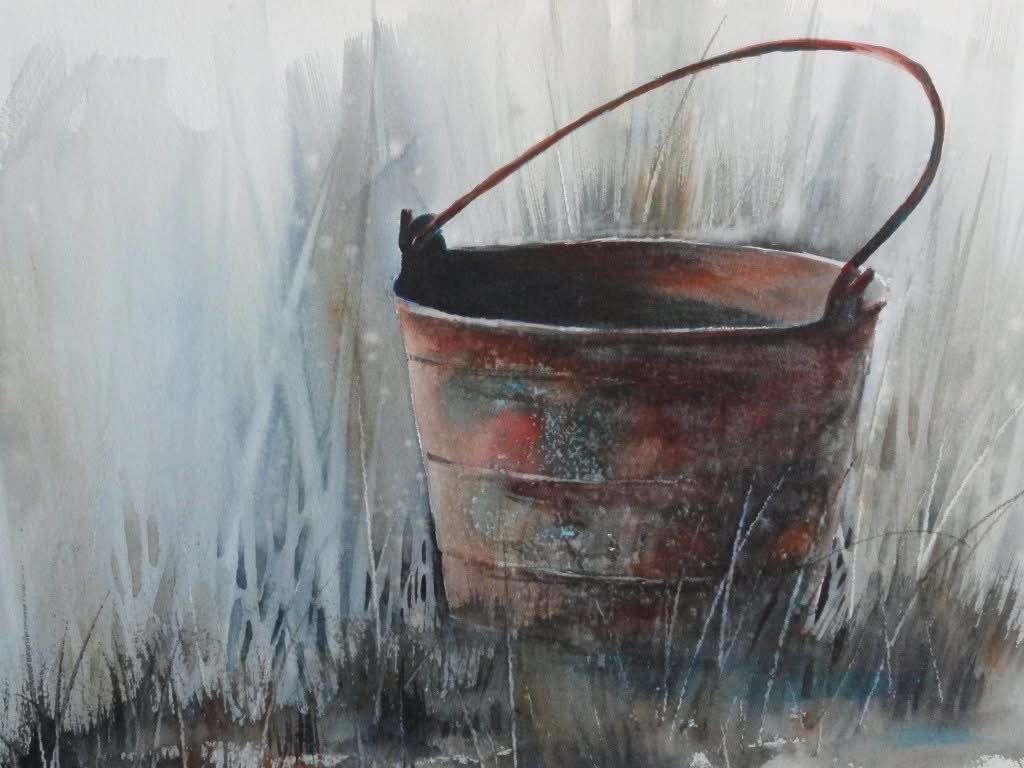
Then he reached for the old bucket of spring water.
The water was cold enough to make the outside of the bucket sweat.
He dipped the metal dipper down into it, brought it to his mouth, and drank deeply until the water ran down his chin and spilled onto the front of his shirt.
He laughed.
Then he handed the dipper to us.
Eddie drank.
Then I drank.
Same bucket.
Same dipper.
Cold spring water beneath the shade of a wagon on a hot Tennessee afternoon.
Nobody worried about it.
Nobody thought anything of it.
We were tired.
We were hungry.
We were together.
And it was a good day.
Just a good day.
There are moments in life that seem ordinary while you are living them.
You do not hear music playing in the background.
You do not realize that you are standing in a moment you will remember decades later.
You are simply there.
A boy.
A pasture.
A wagon.
Sausage and biscuits.
Butterflies along a fence row.
Honeysuckle in the air.
And an old plowman talking about God.
I did not know it then, but I know it now.
That afternoon, I was in the presence of a true follower of Jesus.
Sun Taylor did not need a pulpit.
The field was his sanctuary.
The plow was his teacher.
The rows behind him were his testimony.
He understood something about following Christ that has taken me much of my life to understand.
Faithfulness is often very simple.
You put your hands to the work God gives you.
You keep moving forward.
You try to leave the row a little straighter than you found it.
And when you make a crooked place, you correct it and keep plowing.
You do not have to be famous.
You do not have to be wealthy.
You do not have to have your name written anywhere important.
You simply remain faithful to the ground God has given you.
Sun passed away a few years ago.
I wish I could have been there for the celebration of his life.
I would have liked to hear the stories.
I would have liked to sit with the people who loved him and tell them about that Monday afternoon when a plowman taught a fifteen-year-old boy something about life.
But there is something I believe.
When Sun reached the end of his field, when the work was finally finished and the evening came, I believe he looked back.
And perhaps, for one last moment, he saw the field God had given him.
The years.
The work.
The people he had loved.
The hardships he had endured.
The prayers he had prayed.
And there behind him were the rows.
Straight.
And the furrows.
Clean.
Then he laid the plow down.
And he went Home.
And somewhere beyond everything we can see, I believe the old plowman heard the words every servant of God longs to hear:
Rise Up and Walk This morning, I walked through a park. That sentence would have meant very little to me a few years ago. But today, it feels like a prayer. The morning was quiet. Sunlight slipped between the branches and scattered across the path before me. Birds called from somewhere high in the trees. Leaves stirred gently in the breeze, and beneath all of it I could hear the steady rhythm of my own footsteps. One step. Then another. Then another. There was a time when I never thought about walking. I stood because I wanted to stand. I crossed a room because I wanted to cross it. I stepped outside and simply trusted that my legs would carry me wherever I wished to go. Walking was ordinary. Until it wasn’t. Last year, I lost that ability. Suddenly, something as simple as standing became a mountain. First, I had to learn to stand again. Then came the walker. I remember gripping it tightly, learning to trust legs that no longer felt trustworthy. One uncertain step. Then another. Then came the cane. And slowly, by the mercy of God, there came a day when I could take a step without either one. Today, the Lord has given me the gift of walking on my own again. So this morning, as I moved along that path beneath the trees, I found myself paying attention to things I once ignored—the pressure of the ground beneath my feet, the bending of my knees, the balance of my body, the simple grace of moving forward. Walking. Just walking. And as I walked, these ancient words came quietly to mind: “He has shown you, O mortal, what is good. And what does the Lord require of you? To act justly and to love mercy and to walk humbly with your God.”
What happens when we are paralyzed and can’t walk?
Paralysis is a strange word.
At its most basic, it means the loss or impairment of movement or sensation. A limb no longer responds. A part of the body no longer feels. Something that was meant to move becomes still.
But paralysis can reach much deeper than the body.
It can also mean an inability to act.
Fear can paralyze us.
Shame can paralyze us.
Disappointment can paralyze us.
After enough pain, we can become motionless inside long before anyone notices it on the outside.
And that is one of the cruel things about paralysis.
After a while, we begin to build our lives around what we cannot do.
Our inadequacies become the walls of the room.
Our disappointments become the furniture.
Our fears become familiar companions.
And before long, paralysis begins to frame our existence.
We stop asking what might still be possible.
We stop expecting anything to change.
Sometimes we even stop feeling the ache of what we once wanted.
With that as our backdrop, come with me for a moment to John 5.
Let us walk together into Jerusalem.
Bethesda
Just inside the city, near the Sheep Gate, there is a pool called Bethesda.
Traditionally, the name has been associated with the idea of a House of Mercy.
Five covered porches surround the water.
At first glance, perhaps the place seems peaceful.
Stone columns.
Shade beneath the porticoes.
Water gathered beneath the Jerusalem sun.
But as we draw closer, the beauty disappears.
The porches are crowded.
Bodies lie everywhere.
The blind.
The lame.
The sick.
The weak.
The forgotten.
Some have family with them. Others lie alone.
A man coughs somewhere nearby.
Someone cries out for water.
Another struggles to shift his body away from the heat of the sun.
The smells of sweat, sickness, dust, and human waste hang heavy beneath the stone roofs.
There are too many people and too little help.
It is a gathering place for human suffering.
Everyone is watching the water.
Waiting.
Hoping.
Wondering whether today might finally be their day.
Read John 5:1–5 slowly.
Then look again.
Off toward one side of the porch lies a man.
He hardly seems noticeable anymore.
His body has grown thin.
His muscles have wasted.
Perhaps he lies curled upon a worn mat, looking almost like a pile of old cloth in the shadows.
John tells us he had been in this condition for thirty-eight years.
Thirty-eight years.
Sit with that number for a moment.
Thirty-eight summers.
Thirty-eight winters.
Thirty-eight years of watching other people walk past him.
Thirty-eight years of needing help with things most of us never think about.
Water.
Food.
Movement.
Privacy.
Dignity.
Perhaps someone brought him there in the morning and returned for him later.
Perhaps every day looked almost exactly like the day before.
He had become one more wounded body among many.
One more desperate man waiting by the water.
And over time, it is possible that the pool itself became the center of his entire world.
His disease.
His limitations.
His inability.
His disappointment.
Day after day.
Year after year.
Everything focused upon what was wrong.
Then Jesus walks in.
The Question
Jesus moves through the crowd.
Past the blind.
Past the lame.
Past the desperate.
And somehow, among all those wounded lives, His eyes settle upon this one man.
John tells us that Jesus knew he had been in that condition for a long time.
Then Jesus asks him a question.
Not about his legs.
Not about the pool.
Not about how long he had been lying there.
Jesus reaches deeper.
“Do you wish to get well?”
What a strange question.
I can almost imagine the man looking up at Him.
Do I wish to get well?
The question begins to turn in his mind like a rusted wheel that has not moved in years.
What kind of question is that?
Why else would I be lying here?
Does He think this is funny?
But when the man looks into Jesus’ face, there is no mockery there.
No cruelty.
No sarcasm.
Jesus is serious.
And He waits.
Do you wish to get well?
Why would Jesus ask something that seems so painfully obvious?
Of course he wants to get well.
Or does he?
That is the unsettling thing about the questions of Jesus.
He often asks about things that seem obvious because beneath the obvious lies something we have stopped seeing.
Jesus knew the answer.
But did the man?
Do we?
A Desire Buried Beneath Thirty-Eight Years
Think about his life.
His whole existence had been shaped by brokenness.
Forget riches.
Forget recognition.
Forget fame.
For this man, life had been reduced to one simple, almost unreachable desire:
To walk.
Perhaps when he was younger, he dreamed about it constantly.
Maybe he watched other children run through the streets.
He could hear their feet striking the ground.
Their laughter disappearing around the corner.
And he remained where he was.
Perhaps he watched families make their way toward worship while he stayed behind.
Maybe there were places he wanted to go that he never reached.
People he wanted to follow but could not.
There were ordinary things that required another person’s hands.
To move.
To wash.
To get a drink.
To attend to the most basic needs of his own body.
He wanted to walk.
Surely he did.
But how long can a person carry the same unanswered desire?
One year?
Two?
Five?
Ten?
Twenty?
At what point does hope begin to protect itself by becoming numb?
Maybe at first he believed.
Next year.
Then perhaps:
Maybe someday.
And eventually:
This is simply who I am.
That may be one of the deepest forms of paralysis.
The body stops moving first.
Then, eventually, desire stops moving too.
The heart develops calluses.
Dreams become dangerous because dreams can hurt.
Hope becomes something we no longer allow ourselves to feel.
He was still lying at Bethesda.
Still near the place of mercy.
Still near the possibility of healing.
But perhaps somewhere along the way, the desire itself had gone quiet.
Then Jesus asks:
“Do you wish to get well?”
And suddenly an old desire begins to breathe again.
More Than Walking
Notice something important.
Jesus does not ask:
“Do you want to walk?”
He asks:
“Do you wish to get well?”
There is something larger hidden in that question.
Walking is part of it.
But wholeness reaches deeper.
Jesus is not merely addressing legs.
He is speaking to a man.
A heart.
A history.
A lifetime shaped by helplessness.
And instead of answering the question directly, the man gives Jesus his explanation.
Read John 5:7.
In essence he says:
“I have no one.”
There it is.
The language of inadequacy.
The mantra he has probably repeated for years.
I cannot.
No one helps me.
Someone always gets there before me.
This is why nothing changes.
Perhaps the saddest thing about paralysis is that, after enough time, we begin to explain our lives through it.
Ask us about hope, and we tell you about our limitation.
Ask us what we desire, and we describe our disappointment.
Ask us what we want God to do, and we explain why it probably cannot happen.
Jesus asks about wholeness.
The man answers with inadequacy.
I understand that more than I would like to admit.
Perhaps you do too.
The Command
Then Jesus speaks.
Read John 5:8–9.
“Rise, take up your mat, and walk.”
Rise.
Imagine hearing that word when you have spent thirty-eight years on the ground.
Surely there was a moment when nothing appeared to have changed.
The mat was still beneath him.
The pool was still nearby.
The crowd was still around him.
His legs still looked like the same legs.
But the voice of Jesus had entered the paralysis.
Rise.
At some point, the man had to respond.
He had to move toward the command before he had any history of being able to do it.
Perhaps he put one hand against the stone.
Perhaps his arms trembled as he pushed himself upward.
Perhaps for the first time in decades, he felt strength moving where weakness had lived.
A knee beneath him.
A foot on the ground.
Then another.
Can you imagine the first moment he stood?
The world would have looked different from up there.
For thirty-eight years, he had seen feet passing in front of him.
Now he was looking into faces.
For thirty-eight years, others had carried him.
Now he bends down and picks up the mat that once carried him.
The thing that had been the symbol of his helplessness is now beneath his arm.
And he walks.
One step.
Then another.
Away from the pool.
Away from the porch.
Away from the place where his entire identity had once been defined by what he could not do.
He walks.
Look carefully at the way Jesus deals with people.
Again and again, He leads them toward the deepest places in their hearts.
Consider the two blind men near Jericho.
They sit beside the road asking for help.
Day after day, perhaps they have learned to listen for footsteps and hold out their hands.
Coins.
A piece of bread.
Whatever a passing stranger might offer.
Then they hear that Jesus is coming.
They begin to shout.
The crowd tries to silence them.
They shout louder.
And finally Jesus stops.
He stands before two blind men.
Their condition could hardly be more obvious.
Yet Jesus asks:
“What do you want Me to do for you?”
There it is again.
The question.
Why ask blind men what they want?
Surely Jesus can see.
But perhaps the obvious is not always obvious to the wounded heart.
How long had they been blind?
How long had they sat beside that road?
At what point had the desire to see been replaced by the desire simply to receive enough coins to make it through another day?
There is a terrible exchange that can happen when hope disappears.
We stop asking for life.
We start asking for loose change.
We become beggars in the dust, satisfied with enough to survive another day, when the King of heaven is standing before us asking:
What do you want?
Jesus came to awaken desire.
To the weary, He speaks of rest.
To the lost, He speaks of the way home.
To the bound, He speaks of freedom.
To the brokenhearted, He speaks of healing.
To the dead, He speaks resurrection.
He keeps drawing people toward life.
Why We Walk
Think about a little child learning to walk.
At first, the child is unsteady.
The knees wobble.
The feet seem to have no idea where they are supposed to go.
The child falls.
Again and again.
But then someone kneels a few feet away.
A mother.
A father.
Arms open.
“Come here.”
Suddenly, there is a reason to stand.
The child pulls himself upright.
One trembling step.
Then another.
Why?
Because something is waiting at the end of the walk.
Arms.
Love.
Home.
That is the deeper truth.
The purpose of walking is not merely walking.
We rise because there is Someone worth walking toward.
We walk because the Father has opened His arms.
We walk because His presence is ahead of us.
We walk because His house is our home.
We walk because love has called our name.
What Do You Wish For?
So when I look at our Rabbi standing at Bethesda, I begin to understand.
Walking begins with a question.
What do you wish for?
Not what have you lost?
Not what happened to you?
Not how long have you been lying there?
Not who failed you?
Not who got into the water before you?
What do you wish for?
Perhaps somewhere inside you there is an old desire you stopped speaking about.
Perhaps disappointment taught you to bury it.
Perhaps fear paralyzed it.
Perhaps failure convinced you that you were foolish for ever wanting it.
Perhaps you have lived so long beside the pool that you can no longer imagine yourself anywhere else.
And maybe Jesus is asking you the same question:
Do you wish to get well?
Do you want life again?
Do you want to feel again?
Do you want to hope again?
Do you want to love again?
Do you want to become the person God has been calling you to become?
Then listen.
You may have to put something down.
Perhaps it is the beggar’s bowl of inadequacy.
The old explanation.
The old excuse.
The old identity.
The sentence you have repeated for years:
“I have no one.”
Let it go.
Reach out.
Risk hope again.
Listen for the voice of Jesus entering the place that has been motionless for far too long.
And when He says:
Rise.
Rise.
Put your feet beneath you.
Let the old mat stay where it belongs—under your arm, not beneath your life.
Take the first uncertain step.
Then another.
You may tremble.
Walk anyway.
You may feel weak.
Walk anyway.
You may not know exactly where the road leads.
Walk anyway.
Because the One who called you from the ground is already standing ahead of you.
And perhaps the greatest miracle is not merely that weakened legs begin to move.
Perhaps the greater miracle is that a heart that stopped hoping begins to desire life again.
There is a relationship with God worth getting off the ground for.
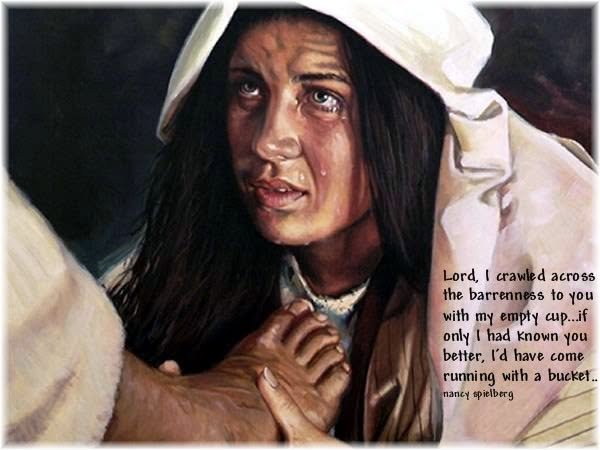
For those standing in the hall… I Shall Not Want I find myself sitting quietly in a pasture today. The grass moves gently beneath the wind, and somewhere beyond me I can hear the soft sounds of life carrying on. There is no hurry here. No noise demanding my attention. And in the quiet, I remember the words of David, the shepherd who became a king: “The Lord is my Shepherd, I shall not want.” I have read those words countless times. But today they feel different. Perhaps David had learned something in those lonely fields that I am still learning. When the Shepherd becomes enough, our wanting begins to change. Not because we suddenly have everything we ever desired, but because the Shepherd knows what we truly need. He leads us to green pastures. He brings us beside quiet waters. He restores what has become weary within us. And slowly, almost without noticing, some of the things we once thought we could not live without begin to lose their hold on us. Fear loosens its grip. Anxiety becomes quieter. The desperate need to control tomorrow begins to fade. Like wolves circling at the edge of the pasture, fear and worry may still be out there. But the Shepherd is here. And because He is here, I can eat. David said, “You prepare a table before me in the presence of my enemies.” Notice—He does not always remove the enemies before setting the table. Sometimes the wolves are still watching from the edge of the field. Sometimes trouble is still near. Sometimes tomorrow is still uncertain. And yet the Shepherd spreads the table. “Sit down,” He seems to say. “Eat.” “I am here.” Perhaps peace is not the absence of wolves. Perhaps peace is being able to eat while the Shepherd stands nearby. And yet… as I sit here with these ancient words, I have to confess something. My heart still wants. I want. I want to hear His voice more clearly. I want a fire in my heart that cannot be explained by personality, emotion, or circumstance. I want to worship until my voice is gone and somehow discover that my chains are gone with it. I want to see His face. I want these blind eyes of mine to finally see the One my heart has been searching for all these years. I want to know Him. Not merely know about Him. I want to know Him. And more than anything else, I want to love Him more. There is a kind of wanting that the Shepherd takes away. But perhaps there is another kind of wanting that He awakens. A holy hunger. A longing that grows as we draw nearer. The strange hunger of a soul that has tasted God and discovers that the taste has only made it hungrier. And when I think about that kind of love, I think about Mary. I see her entering the room carrying an alabaster jar. She knows what is inside. She knows what it is worth. Perhaps her hands tremble as she holds it. Others in the room see perfume. They see money. They see waste. But Mary sees Jesus. And suddenly the value of the jar does not seem quite so great anymore. She breaks it open. There is no careful pouring. No saving a little for tomorrow. No keeping something back in case she needs it later. She breaks it. And the fragrance fills the room. She pours it upon the feet of the One she loves. Her hair falls across His feet. Her tears mingle with the perfume. And for a few sacred moments, Mary does not care who is watching. She has found the One she loves. That is enough. And perhaps that is where this pasture has brought me today. To a hallway. I can hear the voices inside. Jesus is there. Mary is already at His feet. The fragrance of her surrender has reached even out here. And I find myself standing just beyond the doorway. Holding my own alabaster box. I know what is inside it. My fears. My dreams. My plans. My reputation. My disappointments. My need to understand. My need to control. The things I love. The things I fear losing. The things I have kept back because somewhere inside me I wondered whether Jesus could really be trusted with all of me. And I am clutching that box so tightly. I can hear Him inside. I know He is there. I know what Mary discovered when she let go. And still… I stand in the hallway. Perhaps that is the deepest wanting of my heart. Not for Him to give me something else. Not for Him to make the road easier. Not even for Him to silence every wolf at the edge of the pasture. I simply want the courage to loosen my hands. To step through the doorway. To break the box. To pour everything at His feet And to discover that when Jesus becomes the treasure, nothing surrendered to Him was ever truly lost. The Lord is my Shepherd. I shall not want. And yet there is one desire I pray He never takes from me: I want Him. I want to love Him more. And here I stand, at the doorway, still holding my alabaster box… wanting to go in… Selah.
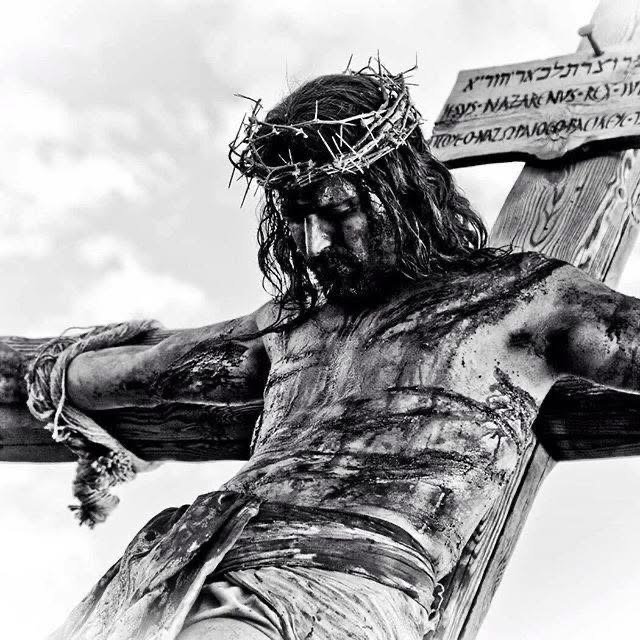
In my office I have a crown of thorns. A silent testament to the wonders of the cross. it made me think of the old hymn, “O Sacred Head” here’s a few thoughts…hope they speak well of the Savior:
O Sacred Head, Now Wounded
O sacred Head, now wounded, bowed beneath our shame, mocked by those who cursed You, yet holy still the same. Once crowned with heaven’s glory, now crowned with thorn and pain, yet even in Your suffering, Your mercy still remains.
What You endured, my Savior, was borne for sinners’ gain. Mine was the rebellion, Yours was the deadly pain. I should have stood condemned there, I should have paid sin’s price, yet You, the Lamb of mercy, became my sacrifice.
What words could ever thank You for love so deep and wide? What song could hold the wonder of mercy crucified? O keep my heart forever near Your wounded side, and let me never wander from the One who died.
Standing before the cross, I find that I am standing on sacred ground.
Not sacred because the earth beneath my feet is holy in itself, but because of the One who hangs above it. The place of suffering has become the place of mercy. The place of judgment has become the place of grace. The place where sin did its worst has become the place where love spoke its final and victorious word.
I look up, and I see the Lover of my soul.
Scarred.
Bleeding.
Crowned.
But the crown upon His precious brow is not the crown He deserved. It is the crown I made for Him. My rebellion twisted those thorns. My pride pressed them into His flesh. My sin mocked Him, wounded Him, and nailed Him there.
And yet He did not turn away.
He wore my crown of thorns so that one day I might wear a crown of glory. He bore my shame so that I might be clothed in honor. He took the place of the condemned so that I might be called beloved. He was lifted up in agony so that I might be lifted out of death.
This is the terrible beauty of Calvary: the innocent One suffered for the guilty, the Holy One bled for the unholy, the King of Glory bowed His head beneath the weight of my ruin.
And still, mercy remained.
That is what breaks the heart open. Not merely that Jesus suffered, but that He suffered willingly. Not merely that He died, but that He died for me. Not merely that He wore the thorns, but that beneath them His heart was full of love.
At the cross, every boast dies. Every excuse falls silent. Every hidden sin is dragged into the light, not to destroy us, but to be covered by the blood of the Lamb.
There, I can no longer pretend I am strong enough to save myself.
There, I can no longer call my sin small.
There, I can no longer measure His mercy as though it were a small thing.
For the cross tells the truth about both of us. It tells the truth about me: I was more broken than I wanted to admit. And it tells the truth about Jesus: He loved me more deeply than I ever dared to hope.
So I stand beneath His wounded head, and I am undone.
The thorns accuse me, yet His eyes forgive me. The blood reveals my guilt, yet it also washes me clean. The wounds speak of my sin, yet they sing of His mercy.
This is sacred ground.
Here, the proud kneel. Here, the guilty are pardoned. Here, the wandering are called home. Here, the condemned are named sons and daughters. Here, the crown of thorns becomes the promise of glory.
And I hear Him call me by name.
Not as a stranger. Not as an enemy. Not as one barely tolerated. But as one deeply loved.
The cross is not only where Jesus died. It is where mercy found me. It is where shame lost its authority. It is where death began to tremble. It is where the wounded Savior opened the way home.
So let my heart stay near His wounded side.
Let me never grow bored with Calvary. Let me never treat His blood as common. Let me never rush past the thorns to reach the crown. Let me never forget what it cost Him to call me His own.
For I stand before the cross, and I am standing on sacred ground.
Above me is the sacred Head, now wounded. Before me is mercy crucified. Within me is a heart learning how to worship. And beyond me is the promise of glory.
Because He wore my crown of thorns, I will one day wear a crown of life.
Because He bowed His head in death, I will one day lift mine in resurrection.
Because He was wounded for me, I will be made whole in Him.
For the past 3 weeks I have begun each message with the account of a pastor that was being harassed by a homeless man at the train station as he was picking up a very important dignitary?
Here is his account:
“Can you spare 50 cents?” the beggar cried out over and over again.
Finally, the Pastor said, “Go away, sir, don’t bother us.”
The man persisted and Pastor Hayden tells us what happened next
“I got angry, and I just shoved him. And he fell off the platform onto the tracks.”
Laying on the ground…the man looked up and said,
“You should have seen the man I was supposed to be.”
You should have seen the man I was supposed to be?
As you look at this account there are two pictures of the beggar that was at the train station that day.
First: there was the beggar, asking for change from the passengers in the station.
Second: there was the broken man that was looking up from the tracks…lamenting over what he could have been.
Most of us can relate to one or the other portraits of this man.
I have a question? Are you the beggar?
Are you the beggar that has been thrown on the train tracks wondering who you could have been?
Can I ask another question? How do we rise up and walk away from our former life of begging?
Today, our teacher will be Bartimaeus
Turn with me to Mk. 10:46-52 (Click to read)
Mark writing for Peter tells us that Jesus was walking down the road in Galilee and the blind man, Bartimaeus, called out, “Jesus, Son of David, have pity on me”.
The apostles tried to quiet him, but he cried louder,
The term for crying out found in verse 48 is interesting. It meant a cry that was uncontrollable. Like the cry of a desperate animal. It was raw.
The cry had no sense of respectability. No sense of decorum. Jesus was passing by, and Bartimaeus wants to be heard and known by the Lord. He needs to be heard.
For years Bartimaeus has sat outside of Jericho and begged for scrapes of those that were going up to Jerusalem to worship God who lives in the Holy of Holies. For years he has sat on the dusty roadside cloaked in blindness and begging for alms.
For years he has heard countless others go up to Jerusalem for the Passover.
To celebrate the day that God would Passover their sins.
This day, tho, God is not passing over…He is passing by…Jesus is going up to Jerusalem to present Himself before the Father as the Passover Lamb.
The King is going up the road…and will not come by this way again.
“Jesus, Son of David, have pity on me”.
Jesus stops and turns, and asks, “What do you want?”
Without hesitation, the blind man says, “I want to regain my sight”.
Jesus replies, “Your faith has saved you.” Hmmm?
Can I ask you a question?
What does Jesus’ reply have to do with Bart’s faith?
Bartimaeus has made straight the way of the King. And the King does so much more than Bartimaeus could ever ask or think.
Although Bartimaeus couldn’t see…he knew that he didn’t want to be a forgotten one, laying on those tracks looking up and crying out,
“You should have seen the man I was supposed to be.”
Not only does he receive his sight, his wild, raw, desperate cry to the Messiah, is counted to him as faith…because of that cry we will see…Bartimaeus when we get home…and he will see us.
Notice this: This is the secret of how Bartimaeus rose up off the tracks and was a beggar no more…
When his sight was immediately restored Mark notes “that Bartimaeus dropped his cloak.”
In that time, for a blind man, the cloak represented security, as the blind in the first-century Palestine were considered cursed by God. Often their families would abandon them to the streets.
Their only protection against the elements was their cloak. They lived with two things that were most precious…their cloak and their beggar’s bowl.
Mark notes that he dropped his cloak.
He dropped all the security he had ever known to follow the one named Jesus.
This is the definition of the word “Know”:
“To have a clear perception or understanding of; or to be sure of.”
We live in a world that values knowing things. Knowing things in our world brings power and influence. It brings security.
Bartimaeus “knew” that his cloak could shield him from the sun, provide a covering when it was cold and a cushion when that old dusty spot by the road got too hard. These are the facts.
“Knowledge is often understood in terms of factual information. Knowing something about an object or an idea or a person. This type of knowing is not so bad on facts, but it does not translate well to relationships.
There is a difference between knowing facts and being known.
This is partly due to the way go about the process of knowing and being known. We tend in our culture, to place a great deal of emphasis on the ways and the degree to which we know God (or things about God) rather than to the degree we are “being known by God.”
I want to be clear here. I am not saying that research and study, or knowing empirical truth is unimportant. But I am emphasizing how much of our lives and our world revolve around knowing in a manner that assures us that we are Right!
This need to be right, to be rationally orderly and correct, can subtly prevent us from the experience of being known…of loving and being loved…which is the highest call of humanity.
Look at again at Bartimaeus…Bartimaeus knew things:
The facts were this…he was one of the roadside people. He was blind. He was a beggar. He was never going up to Jerusalem to celebrate Passover. The people of Jericho “knew” him as a blind person.
He “knew” things but hadn’t been known by anyone in such a way that he felt understood, forgiven, or even encouraged.
No one even knew that his one passion that he would have given everything up for…was to see.
I want you to hear this…his world was shaped by what he knew, and what others knew about him.
The downside of this type of knowledge is this…you will run right up against this wall…there are limits to our knowledge.
There is a difference between knowing facts and being known.
Faith is a response to go beyond what we know.
Faith and trust is the call to go beyond.
Just knowing facts is not good enough. The process of being known is where our lives are kneaded like bread…this is where God brings us closer to our true identity…getting us ready for the return of our King.
This process of knowing and being known by God can be a very fearful proposition.
To know God, you must be willing to be known.
To come out of hiding and bring everything that you are and put it on the table…
I wonder if the people of Bartimaeus’ town knew that beneath those rags was a passionate man who could no longer live in the place that he knew so well.
I wonder when Bartimaeus finally got fed up with where he was and who he had become?
Was there more there than a blind man with only a cloak and a bowl to his name?
There was a heart yearning to be free. And so Bartimaeus cries out…and no one could shut him up.
The call to leave the cloak life is a call to a life that we cannot be sure of…something that we don’t know.
Know this, as you rise up and scream out for the Lord as He is passing by the world will try to sit you down and shut you up…
“Don’t bother the King…this is all you are and all you are worth…this is all you will ever be…sit down.”
Your fears will echo and whisper what the world knows: “This is all I am…and all that I am worth…quit making a show…sit down and shut up…Let the king pass by…
But listen to what the Holy Spirit is shouting to your heart, in a raw uncontrollable overpowering call:
“Take courage, stand up! He is calling for you”
“and throwing aside his cloak, he jumped up and came to Jesus.”
I once was blind…here me beloved…you need to do what Bartemaeaus did…this is revival..