When I was fifteen years old, I spent my summers in Flat Creek, Tennessee.
I did not know it then, but those summers were teaching me things I would carry for the rest of my life.
Flat Creek had a way of doing that.
The lessons did not always come from books or pulpits. Sometimes they came from an old fence row, a hay wagon, a cold bucket of spring water, or the weathered hands of a man who had spent most of his life working the earth.
That summer, I met a man named Sun Taylor.
Sun was a large man, broad through the shoulders, with hands that looked as though they belonged to the land itself. They were scarred and calloused from years in the fields, the kind of hands that had gripped plow handles, lifted feed sacks, repaired fences, and worked beneath a Tennessee sun until the light began to fade.
Sun was a plowman.
He was the son of a sharecropper, and his granddaddy had been a slave.
One day I asked him about his name.
He broke into that wide grin of his and told me that he had been born on a Sunday and that his father made a little extra money doing tailoring.
“That’s how I got my name,” he said.
Sun Taylor.
And then he laughed.
I can still see that grin.
One crisp Monday morning, we all gathered in the upper pasture to bale straw for the winter.
It was about eighty acres.
To a fifteen-year-old boy, it looked like it went on forever.
The morning began cool, but by midday the Tennessee sun had settled over the fields. The air smelled of cut grass and dry straw. Dust clung to our clothes and sweat ran down our backs as we worked our way across the pasture.
By noon, everybody was ready to stop.
We pulled the wagon near the fence row where there was a little shade.
The fence was tangled with honeysuckle, and butterflies drifted lazily among the blossoms as if they had nowhere else in the world to be.
We sat down in the shadow of that wagon.
My grandmother Lottie Belle Dalton, had packed sausage and biscuits for us.
Nothing fancy.
Just good country food wrapped up and carried into the field.
We sat there with dirt on our clothes and straw stuck to our shirts, eating those biscuits and sausage like we had been invited to a feast.
And that is where a plowman schooled me.
Sun sat there beneath the wagon, looked out over the field, and smiled that great big smile.
Then he said,
“The Lord has surely been good to me.”
He paused and looked down at the food in his hands.
“Good to me,” he said again.
“I’m sitting here eating like a king.”
Then he looked out across the pasture.
“Working in these fields.”
And then he said one word that I have never forgotten.
“Free.”
He did not say it bitterly.
He did not say it with anger.
He said it with gratitude.
Here was a man whose granddaddy had been a slave, whose father had worked as a sharecropper, sitting beneath the shade of a wagon in a Tennessee field, eating sausage and biscuits, and thanking God because he was free.
At fifteen years old, I did not fully understand what I was hearing.
I do now.
After a while, Sun looked over at me and my cousin Eddie.
His face grew a little more serious.
And he said,
“When the Lord finally takes me home, I want to look behind me and see the rows straight and the furrows clean.”
That was it.
No sermon.
No long explanation.
Just a plowman talking about the end of his life.
Straight rows.
Clean furrows.
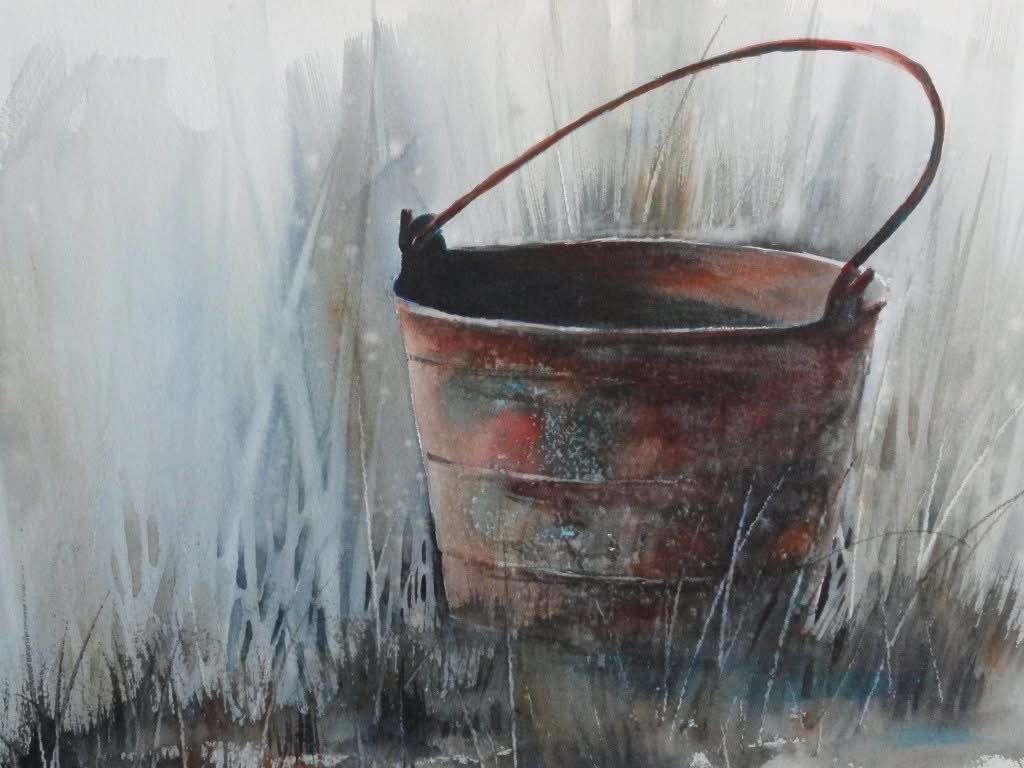
Then he reached for the old bucket of spring water.
The water was cold enough to make the outside of the bucket sweat.
He dipped the metal dipper down into it, brought it to his mouth, and drank deeply until the water ran down his chin and spilled onto the front of his shirt.
He laughed.
Then he handed the dipper to us.
Eddie drank.
Then I drank.
Same bucket.
Same dipper.
Cold spring water beneath the shade of a wagon on a hot Tennessee afternoon.
Nobody worried about it.
Nobody thought anything of it.
We were tired.
We were hungry.
We were together.
And it was a good day.
Just a good day.
There are moments in life that seem ordinary while you are living them.
You do not hear music playing in the background.
You do not realize that you are standing in a moment you will remember decades later.
You are simply there.
A boy.
A pasture.
A wagon.
Sausage and biscuits.
Butterflies along a fence row.
Honeysuckle in the air.
And an old plowman talking about God.
I did not know it then, but I know it now.
That afternoon, I was in the presence of a true follower of Jesus.
Sun Taylor did not need a pulpit.
The field was his sanctuary.
The plow was his teacher.
The rows behind him were his testimony.
He understood something about following Christ that has taken me much of my life to understand.
Faithfulness is often very simple.
You put your hands to the work God gives you.
You keep moving forward.
You try to leave the row a little straighter than you found it.
And when you make a crooked place, you correct it and keep plowing.
You do not have to be famous.
You do not have to be wealthy.
You do not have to have your name written anywhere important.
You simply remain faithful to the ground God has given you.
Sun passed away a few years ago.
I wish I could have been there for the celebration of his life.
I would have liked to hear the stories.
I would have liked to sit with the people who loved him and tell them about that Monday afternoon when a plowman taught a fifteen-year-old boy something about life.
But there is something I believe.
When Sun reached the end of his field, when the work was finally finished and the evening came, I believe he looked back.
And perhaps, for one last moment, he saw the field God had given him.
The years.
The work.
The people he had loved.
The hardships he had endured.
The prayers he had prayed.
And there behind him were the rows.
Straight.
And the furrows.
Clean.
Then he laid the plow down.
And he went Home.
And somewhere beyond everything we can see, I believe the old plowman heard the words every servant of God longs to hear:
“Well done, good and faithful servant.”
Sun Taylor.
Grandson of a slave.
Son of a sharecropper.
A plowman from Tennessee.
And in the end—
a son of the King.
Selah.